Best Strategy Games of All Time: 7 PC and Console Classics Ranked
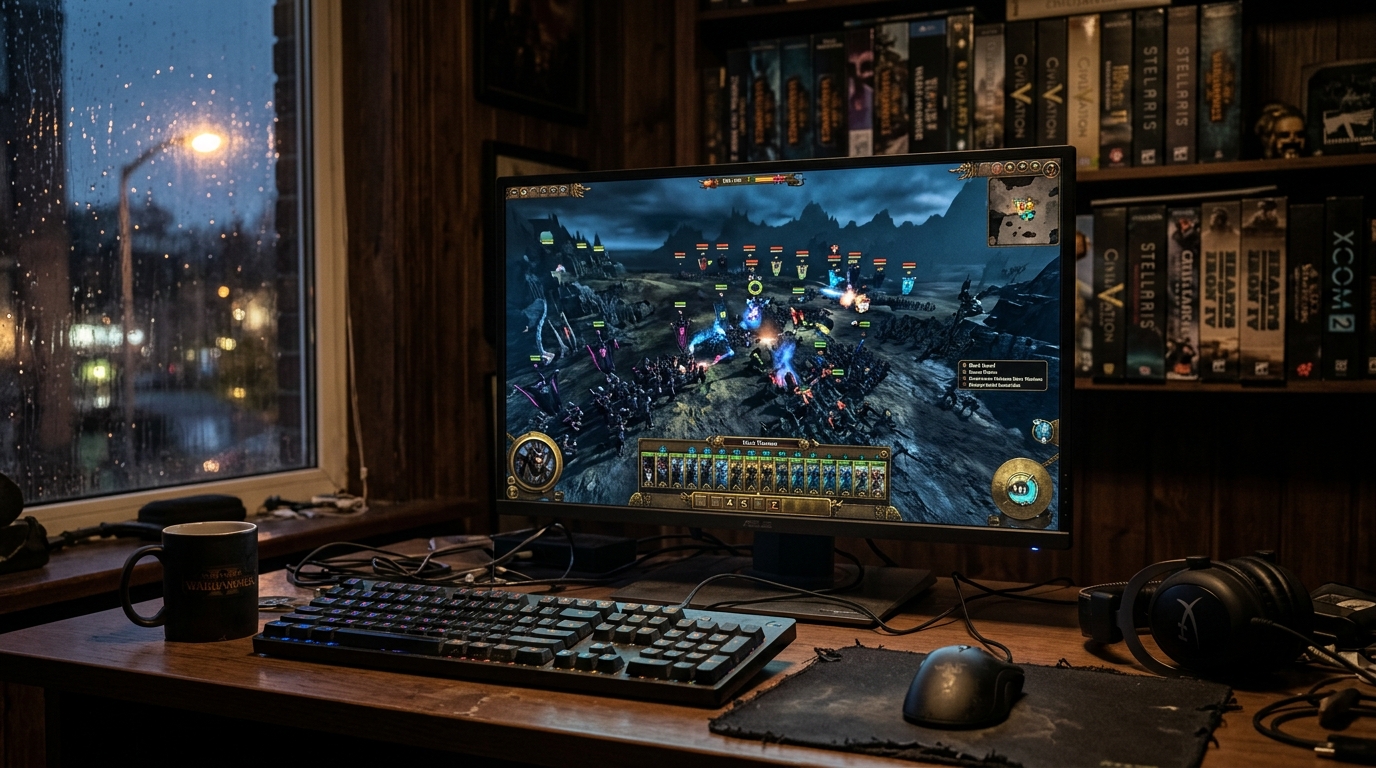
I've played strategy games since Populous on the Amiga in the 1990s and 30 years later I still lose weekends to Total War. This is my guide to the best strategy games of all time. When deciding the games to sink hundreds of hours into, my rankings come down to how much I personally played them and the titles I always went back to. This 1 to 7 order reflects my personal favorites mapped directly to the games I logged the most hours in. Too many games start strong and turn into boring work after ten hours. If you want games that stay exciting across hundreds of matches, Total War: Warhammer 2 takes the overall top ranking because its tactical battle layer, terrain mechanics, unit matchups, and underdog comeback potential deliver hard-fought victories that no other strategy game matches.
Across all seven games in my list, I would estimate that I have put in over 800 hours. I have spent decades testing what makes army builders and tactical simulators hold up over the long haul. See Total War: Warhammer 2.
Where Strategy Games Actually Got Their Teeth
I started playing computer games back in the 1980s on a Commodore Vic 20 when I was eight years old. The visuals were just crude blocks and flickering lines, but they hooked me immediately.
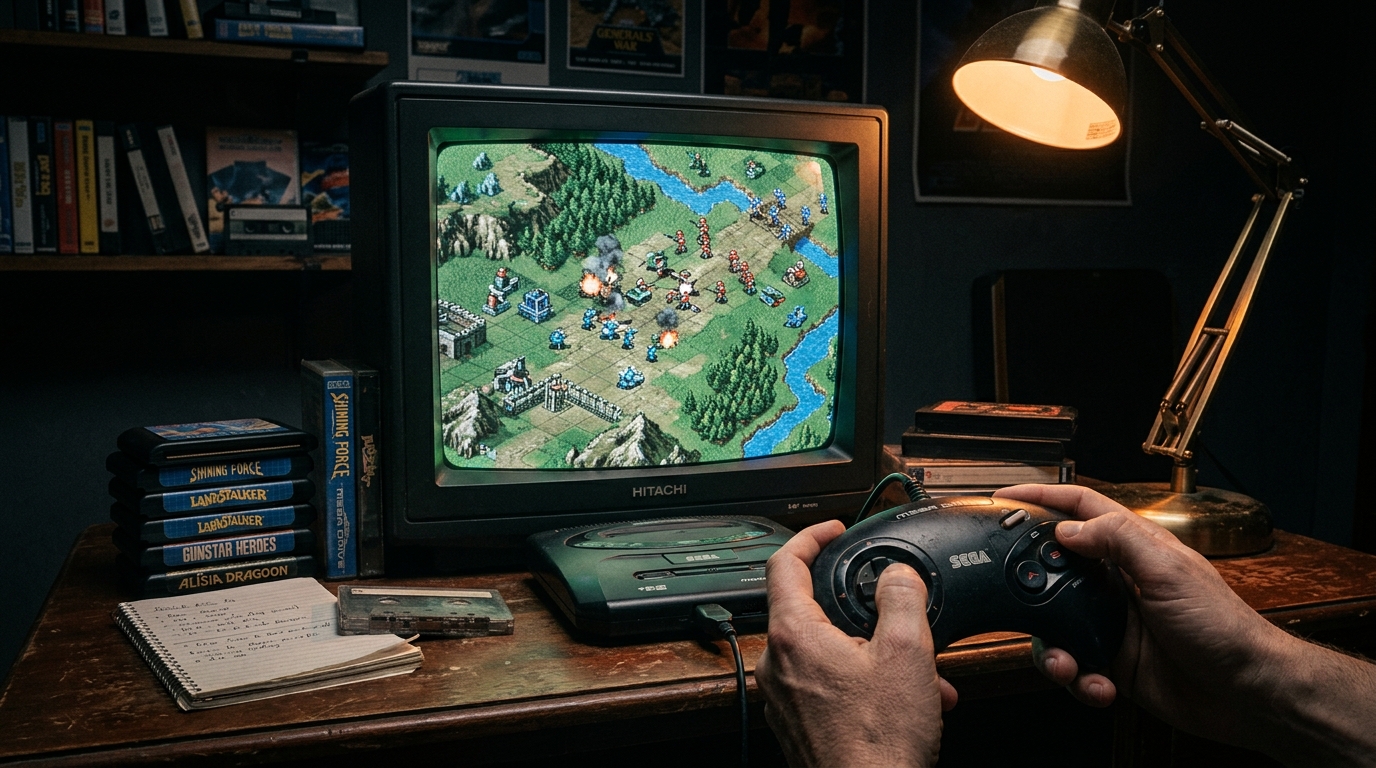
The real tactical spark came in the mid-1990s on the Sega Mega Drive console. That was where I played my very first real-time strategy game, Megalomania, and no other title ate up as much of my free time back then. Even today, when the nostalgia hits, I take the time to set up an emulator on my computer just to relive matches, even though the graphics and sound are dated. I prefer gritty tactical field choices.
My rankings come down to my own play hours and the games I kept returning to over decades. I left off competitive click-fests like StarCraft and 4X map painters like Civilization. Great strategy titles introduce fresh choices as a match unfolds. Bad ones settle into a boring loop where you find one winning pattern and repeat it until your eyes hurt.
Command and Conquer was the second strategy game that got me addicted, and it defined the genre with far more interesting levels, real resource management, and fun battles leaps ahead of Megalomania. Of course, by today's standards regarding the impact of things like weather, terrain, and experience, it is severely outgunned now.
Modern hardware changed how we interact with these worlds, and while I have owned almost every major console over the years, strategy games belong on a desktop computer. You need a keyboard and mouse to box squads, queue buildings, and sweep across a massive front line in half a second. Gamepads just feel clumsy here.
Sometimes I load games onto my Steam Deck handheld when traveling, but the small screen and thumbsticks cannot match the precision of a proper desktop mouse.
Survival games also branched out from classic army combat during this evolution. Frostpunk doesn't have battles, but it features a very exciting story where resource management is key, and the game is unique with great replay value because keeping a frozen city alive under extreme cold creates the same mental pressure as fighting off an invading army.
Comparing All Seven Strategy Classics at a Glance
The table below breaks down the seven games ranked by my personal time invested, showing prices, ideal platforms, key advantages, and trade-offs.
| Product | Price | Best use case | Standout feature | Trade-off |
|---|---|---|---|---|
| Megalomania | ~$10 | Sega Mega Drive | pioneered early 16-bit real-time strategy | extremely dated by today's standards |
| Company Of Heroes 3 | ~$59.99 | PC | excellent tactical battle scenes utilizing terrain | narrower strategic scope outside combat |
| Total War: Warhammer 2 | ~$39.99 | PC | unmatched combat action, sieges, and underdog comeback battles | requires substantial time investment |
| Diplomacy is Not an Option | ~$29.99 | PC | large-scale medieval siege defense | repetitive tactical loops |
| Manor Lords | ~$39.99 | PC | intricate settlement management and living village ecosystem | basic and unstrategic combat in Early Access |
| Command and Conquer | ~$19.99 | PC | defined the early RTS genre with interesting levels | severely outgunned by modern weather and terrain mechanics |
| Frostpunk | ~$29.99 | PC | unique survival story with intense resource management | lacks traditional military battles |
#7 Megalomania
Megalomania was way ahead of its time when it launched on the Sega Mega Drive. You played as a god guiding little cavemen across tiny island territories while researching weapons that progressed from crude rocks and wooden sticks all the way up to nuclear missiles.
The tension still holds up.
You had to decide whether a worker should dig for raw minerals, stay in the lab designing better gear, or put on armor to fight the rival tribe. If you assign too many men to build defensive walls your research halts entirely. But if you throw everyone into weapons design the enemy marches right in while your troops are still unarmed. That core triangle of mining, research, and army recruitment formed the blueprint that later games like Age of Empires used.
The visual presentation is ancient today, with fuzzy speech samples and maps locked to rigid grids. It suits retro enthusiasts who want to see where console real-time strategy began. Though the catch is that you cannot drag-select groups or set patrol paths without wrestling with vintage hardware or emulator settings.
#6 Company of Heroes 3
World War II games often feel crowded, but this series approaches ground combat with a heavy focus on dirt and cover. Instead of collecting gold or cutting wood, you capture fuel depots and ammunition points across an active front line.
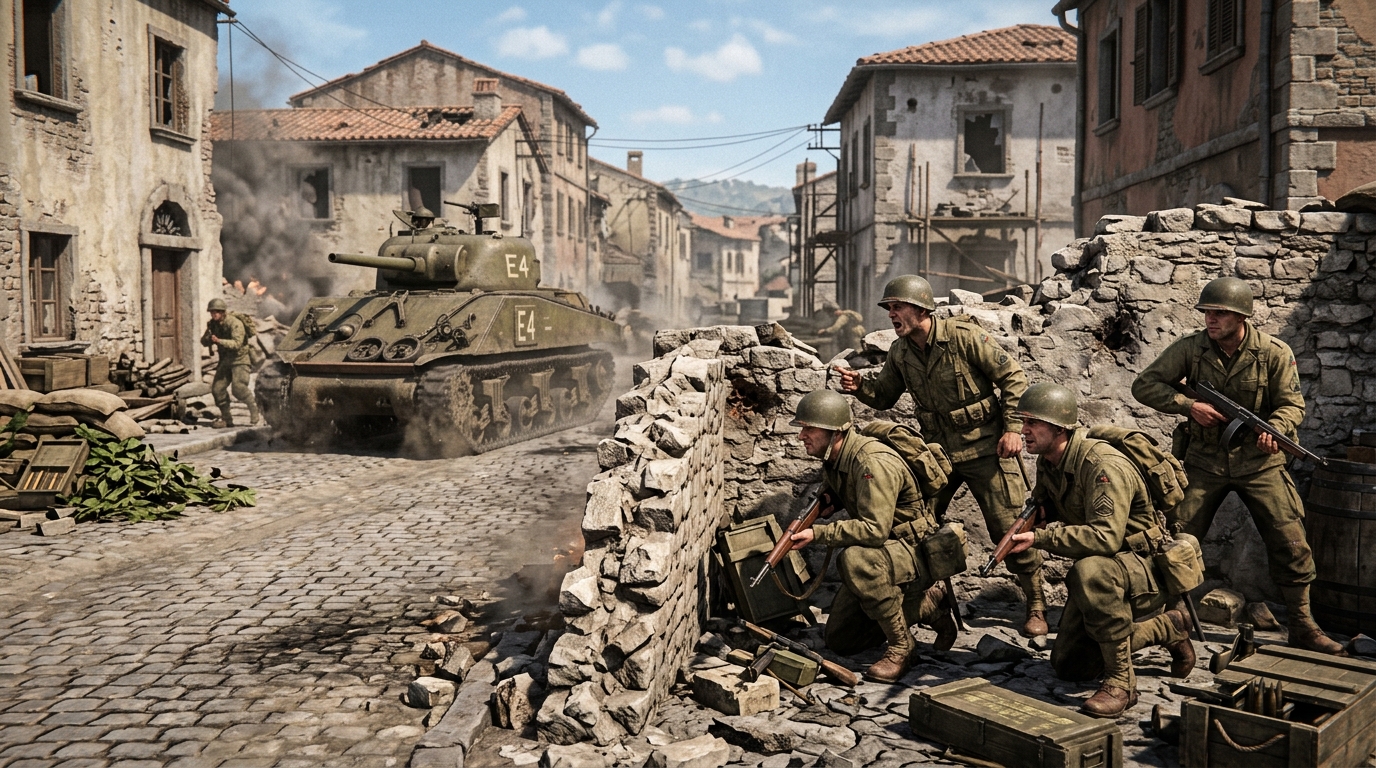
Squads behave like actual soldiers. If a machine gun opens fire down a street, your infantry dive behind low brick walls or drop into sandbag trenches. Buildings crumble under mortar fire, which changes where your men can hide. You cannot simply build a huge swarm of identical tanks and steamroll the map. Heavy tanks run out of room in tight cobblestone alleys, and anti-tank infantry hidden inside second-story houses will knock them out from above.
Company of Heroes features battle scenes that are absolutely excellent and rely on real strategy and terrain, which makes it much more realistic and rewarding when you win.
The game suits players who prefer small-unit tactics over running giant economies. The catch lies in what happens between those firefights. The turn-based campaign map feels thin compared to games built specifically around grand strategy. The strategic choices outside the real-time battles lack weight, leaving the combat to carry the entire experience.
#5 Command and Conquer
This classic defined the genre for a generation. The campaign offers two distinct factions to lead into war. But i always preferred the GDI because I'm a sucker for playing the good guys while the Brotherhood of Nod never felt right to me. Guiding the GDI forces through tense missions made me feel like the hero.
Every mission challenges you to gather Tiberium, drop a construction yard, and crush the enemy base. It is punchy and direct. But modern games demand far more variety than repeating the same base build.
It suits retro fans who want to experience where base-building strategy started. The catch is the clunky AI. Harvester pathfinding is notoriously clumsy as your Tiberium trucks wander straight into enemy defenses, and raw tank rushes easily exploit the rigid unit balance in Command and Conquer.
#4 Diplomacy is Not an Option
This title takes the stress of medieval castle defense and turns the enemy numbers up to absurd heights. Instead of fighting balanced armies, your modest fort faces endless hordes made up of tens of thousands of screaming peasants, armored knights, and lumbering siege engines.
Physics govern the projectile combat.
Arrows fired from low wooden towers bounce harmlessly off front-rank shields, but raising those archers onto high stone cliffs lets their volleys arc deep into unarmored crowds. Catapult boulders crash into tightly packed swarms, sending digital bodies flying across the grass. It looks spectacular.
Managing the town behind those walls demands equal vigilance because rotting corpses left outside your gate will spread plague through your workforce if grave diggers fail to clear them in time. Disease kills faster than catapults. You must also stockpile grain and fish to keep your workers fed through sudden winter dips.
It suits anyone who loves castle building mixed with massive horde defense. The catch is the tactical repetition. Because once you figure out the ideal ratio of stone ramparts, ballista towers, and food storage, every late-game wave demands the exact same response.
#3 Manor Lords
I bought Manor Lords in Early Access hoping for deep medieval settlement building combined with grand tactical battles. The village simulation side blew me away, but the military side fell flat.
Starting on a patch of wild dirt with just a few families and a crate of supplies is captivating. Workers chop down timber in nearby woods while oxen haul massive logs down dirt paths. Watching them nail each wooden truss into place board by board is genuinely hypnotic.
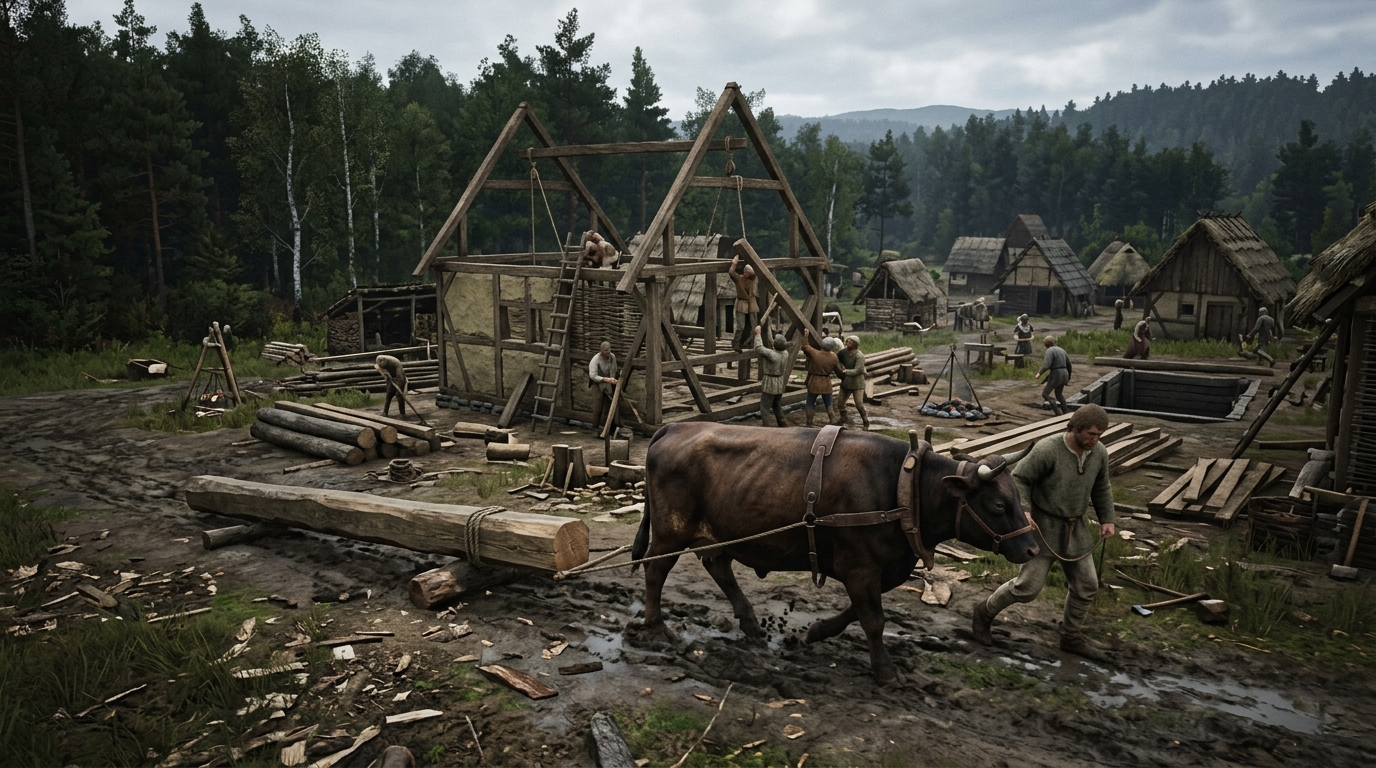
The ecosystem feels alive and interconnected:
- Backyard plots: Upgrading a house lets residents raise chickens or pigs, providing eggs and meat directly to the market without relying on communal farms.
- Surplus trading: Villagers who raise extra livestock sell excess food to neighbors, building natural wealth across the settlement.
- Logistics routes: Dirt roads widen over time as handcarts travel them, turning animal tracks into genuine village thoroughfares.
Yet the military battles fall flat. Combat feels bare and unstrategic in Early Access, degenerating into clumsy scrums where units ignore formations and lack any of the tactical depth found in dedicated wargames. It is far less engaging than the peaceful town management that comes before it.
If the developers bring combat up to that same standard, this title could become an all-time great. For now, see Manor Lords as a brilliant town builder with an underdeveloped war layer.
#2 Frostpunk
Frostpunk pulls strategy completely away from military warfare and focuses entirely on human survival against brutal winter cold. Instead of ordering infantry across battle lines, you spend every waking minute balancing dwindling coal reserves, overwhelmed medical posts, and freezing tents. I have immense respect for this game.
The real weight comes from brutal moral decisions you cannot dodge. When coal reserves tank during sub-zero storms, you sometimes have to deliberately turn down the central generator and accept that vulnerable citizens will freeze to death in their beds. That razor-thin margin between survival and sacrifice creates genuine emotional dread as your city clings to life.
It suits anyone who wants a gripping survival story built around strict resource planning under extreme stress. The obvious catch is the complete lack of military combat, so look elsewhere if you need armies, battle lines, and enemy forts to conquer.
#1 Total War: Warhammer 2
This game absorbed the largest share of my gaming life. I logged over 350 hours into it, completing campaigns across several factions. That total does not even count the hundreds of hours I spent in historical entries like Rome and Shogun. None of those historical settings matched the variety found here.
Total War stands out as a clear winner. The mix of an empire management campaign and massive real-time battles creates an unmatched loop. On the strategic map, you manage province tax rates, build recruitment barracks, and position armies near border passes. Once two armies collide, the game shifts to a vast 3D battlefield where thousands of soldiers fight under your direct control.
The tactical battle layer shines brightest when the odds are stacked against you. You can enter an engagement as the clear underdog and still pull off a victory through smart decisions:
- Positioning on hills: Troops placed on elevated ground gain physical charge bonuses and shoot farther, while tired enemies struggle to climb toward them.
- Flanking cavalry: Hiding shock riders inside thick forests keeps them off the enemy mini-map until their frontline infantry commits to a melee clash.
- Exploiting unit counters: Heavy spearmen absorb cavalry charges without breaking, while armored infantry cut through light skirmishers.
- Timed magic spells: Dropping a wind spell right along a packed enemy line can break their morale before your frontline collapses.
The siege battles stand out as high-water marks. Defending a stone citadel with two battered garrison units against twenty attacking squads is pure adrenaline. You place archers on the ramparts, bottleneck monsters at the inner courtyard gates, and hold the capture point until the attacker breaks.
I bought the sequel, Warhammer 3, on launch day. While the third game added minor technical improvements and diplomatic options, I never felt the same urge to stay with it. Warhammer 2 had better faction balance and a campaign map that felt right. The catch is the sheer time commitment. Finishing a campaign takes dozens of hours, making it wrong for anyone looking for quick fifteen-minute skirmishes.
Final Strategy Game Decision Framework
Choosing the right strategy game comes down to what part of a match grabs your attention. If you want a deep historical village simulation where your citizens actually haul timber and build homes, grab Manor Lords. If you prefer fast-paced squad tactics where every crater and ruined wall matters, go with Company of Heroes 3. But if you want grand empire management paired with deep tactical battles where every hill, forest, and flank decides the outcome, pick Total War: Warhammer 2 and do not look back.