Learning to Snowboard at 30: is it Too Late to Start?
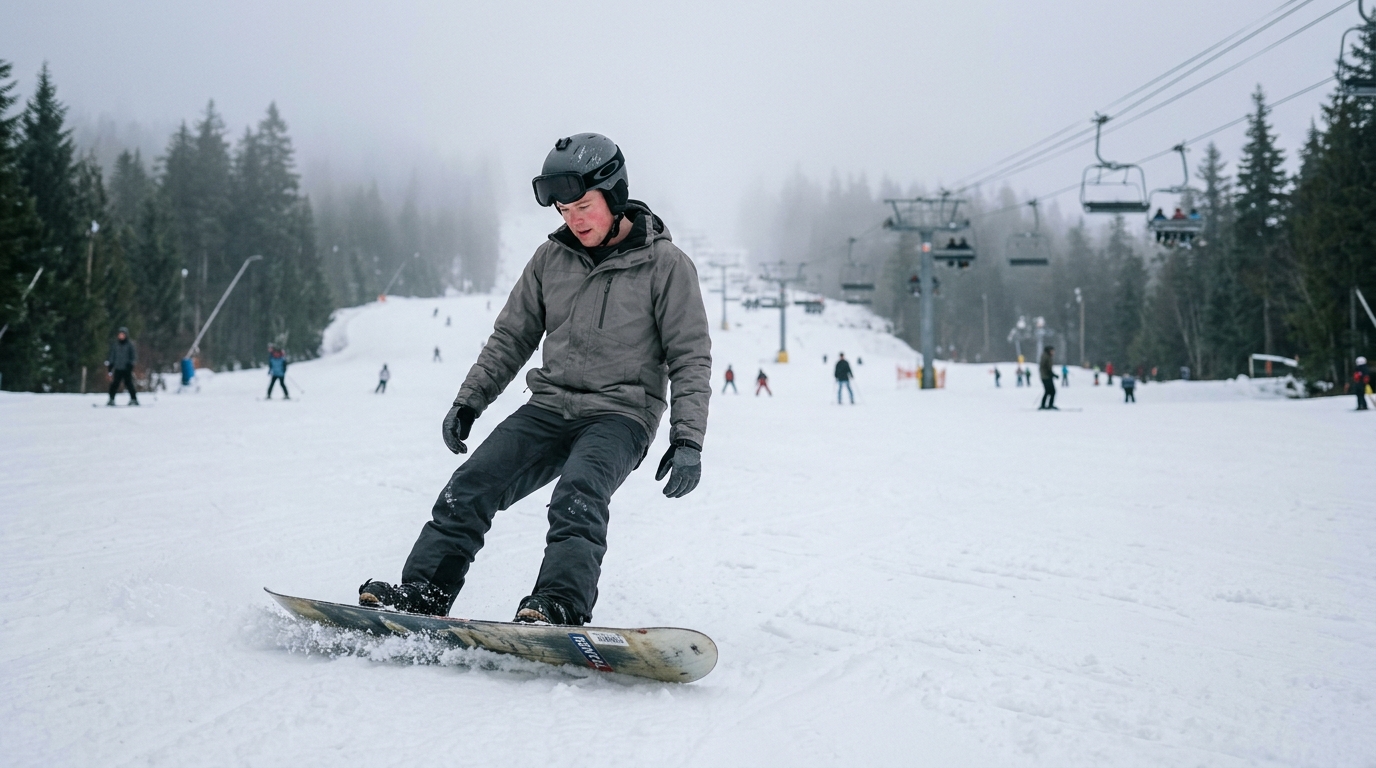
Learning to snowboard at 30 is completely worth it, but adult learners must expect higher baseline fear than younger riders. Greater life experience makes you conscious of what can go wrong, and adult bodies take longer to bounce back from hard falls.
When you are twenty, you tumble down an icy slope, laugh it off, and sprint back onto the lift. In your thirties, you catch an edge and immediately think about your mortgage, your desk job, and whether your health insurance covers shoulder surgery. You feel every impact in your knees and lower back. Your brain naturally hesitates because you understand the real-world consequences of an injury.
We heal slower when we age and I think that makes us naturally more fearful, and speeding down an icy mountain may provoke a more cautious mindset than is needed to progress. That caution does not mean you missed your window. It simply means you cannot learn like a fearless teenager. With proper physical preparation, smart gear choices, and a realistic mountain plan, starting in your thirties is deeply rewarding.
Why Learning to Snowboard at 30 is Entirely Worth It
Fear is the biggest hurdle for older beginners, and that fear makes sense. When a child falls, they drop two feet to the ground and weigh very little. When an adult catches an edge, six feet of height and full body weight slam into packed ice. When your brain senses danger, your instinct is to lean away from the slope onto your back foot. Leaning back lifts your front contact point, robs you of edge control, and sends the board skidding out of your control. As someone who started snowboarding after turning 30, I learned these lessons through trial, fatigue, and expensive gear mistakes.
The physical toll of an impact is also very real. A bad fall can leave you stiff for days, which is why safety gear is mandatory. I learned this while standing completely still on a beginner run. Out of nowhere, a group of out-of-control children crashed into me from behind. My board flew out, and the back of my head slammed against the rock-hard snow.
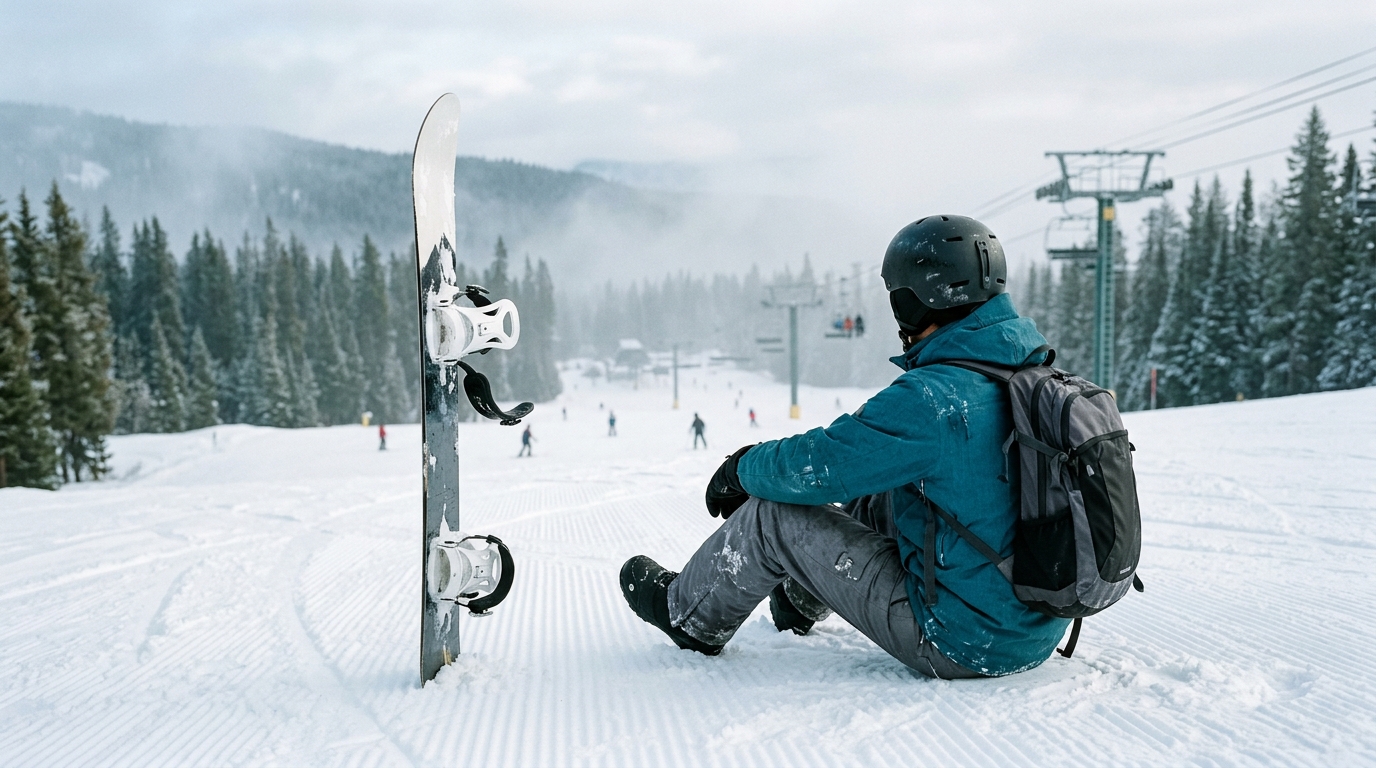
Dizziness set in immediately, and I sat there feeling the shock run through my neck. My helmet took the brunt of the collision, saving me from severe trauma and an immediate trip to the hospital. Seeing adult beginners ride down mountains without helmets is terrifying. Other people on the slope are unpredictable, and you cannot control who slides into you from behind. Wearing full protection lets you push past your baseline fear and actually enjoy the mountain.
Conditioning Your Body and Surviving the First Days on the Snow
Most people assume their gym fitness will easily carry them through a week of winter sports. They quickly discover that snowboarding uses small stabilizer muscles in the feet, calves, and core that standard workouts completely ignore. Without preparation, you will be utterly exhausted after forty-eight hours on the slopes.
Before my first mountain trip, I tried practicing on a local dry slope. The stiff plastic matting felt unforgiving under my boots, and catching an edge on plastic bristles caused hard falls that shook my confidence before I even touched snow. While they introduce basic mechanics, they do not feel like real snow and can wreck your confidence early.
When I finally reached the real mountains in Mayrhofen, Austria, the physical reality hit hard. It took me an entire day just to get down three basic beginner slopes. By late afternoon, I was practically sliding down the final run on my backside because my leg muscles were burning and shaking from fatigue.
You can save yourself that agony with a few basic habits:
- Leg endurance: Train your legs with wall sits and bodyweight squats for four weeks before your trip.
- Morning warm-ups: Spend ten minutes stretching your hamstrings, hips, and calves before clicking into your bindings.
- Powder hunting: Practice on softer snow or fresh powder days, which hurt far less when you take a tumble.
- The long lunch: Ride hard all morning, then spend the afternoon having a long lunch and drinks in the sun.
Taking breaks is not cheating. Sitting on an outdoor deck with good food while resting your legs is easily one of the best parts of any ski holiday.
Gear Choices and the Expensive Boot Mistake
Starting out usually tempts people to buy gear fast, but buying the wrong items costs serious money. When I started, I spent roughly €1,000 on gear right away. That included a brand-new pair of entry-level Burton boots that felt snug in the shop.
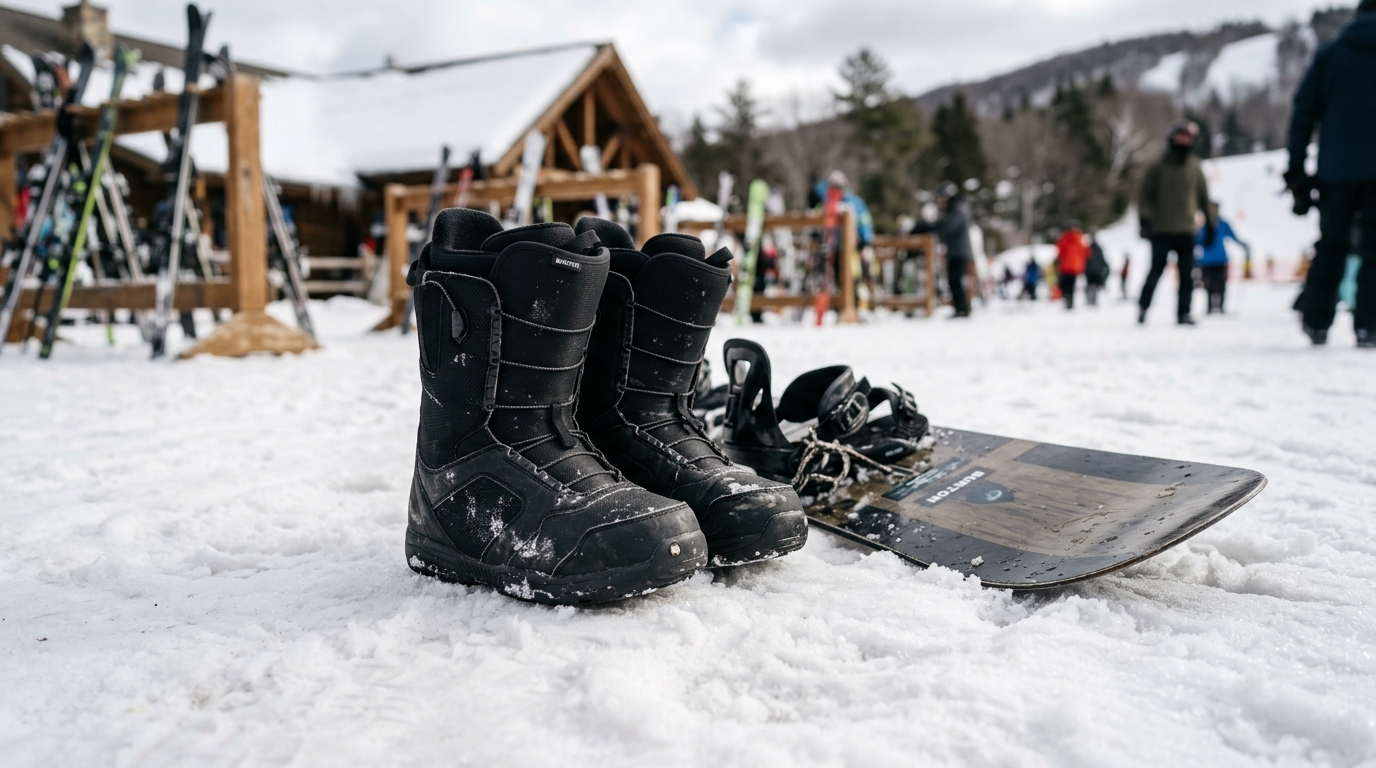
Once I got on the mountain, cold temperatures and all-day pressure made my feet swell. The tight boots squeezed my feet until they ached constantly. By the second morning, the pain was so bad that I could barely walk down the hotel stairs. Buying replacements in a high-end resort village was completely out of my budget.
Fortunately, a local pointed me toward a Decathlon store twenty minutes outside the resort. I spent around €90 on a pair of beginner Decathlon Dreamscape boots that offered a wider toe box and softer padding. They felt comfortable right away and solved my foot pain on the spot. Those budget boots ended up lasting me seven years, and I eventually passed them on to a friend who still rides in them today.
When you buy hardgoods, avoid stiff, advanced setups. Expert boards have razor-sharp edge responses that catch easily on flat snow, throwing novice riders onto their faces. Choose soft, beginner-specific boards and bindings from established brands such as:
- Burton
- Capita
- K2
- Lib Tech
- Nidecker
- Ride
- Roxy
- Salomon
Beginner boards feature rockered tips and softer flex patterns that forgive balance mistakes. Because thousands of new riders pick up the sport every year, these entry setups also hold fantastic resale value when you are ready to upgrade.
Here is how you should split your gear budget early on:
- Helmet: Buy brand-new so you know the protective foam has never taken a hard impact.
- Boots: Buy new so the inner liners pack out and mold directly to your specific feet.
- Snowboard and bindings: Rent during your first week, or buy a used beginner board from a reputable brand.
- Outerwear: Buy durable, waterproof pants, because adult beginners spend a lot of time sitting down in wet snow.
Skipping Lessons and Wasting Resort Lift Pass Money
On my first trip to Austria, I spent about €350 on a full lift pass and spent the entire week trapped on just two beginner slopes. I had skipped in-resort lessons because I thought my two-hour dry slope session at home was enough preparation. That was a costly miscalculation. Without an instructor teaching me proper weight transfer, I could not safely access the wider mountain lift network. On my second trip, I booked proper group lessons and progressed ten times faster. Skip the expensive mega-resorts until you can link turns, and always pay for real instruction on day one.
Escaping Daily Stress on the Mountain with Friends
Riding a chairlift toward an open peak clears your head right away. After a hectic week of work emails, being outside in the mountains resets your mood completely. You have to focus on your next turn, leaving no mental space for daily stress.
It also turns bleak winter months into something you look forward to. Getting outdoors with friends, laughing over awkward falls, and sharing a warm mountain lunch beats staying stuck inside. You get fantastic exercise without feeling trapped in a boring gym routine. Starting in your thirties takes patience and extra padding, but carving down a clean run makes every sore muscle completely worth it.